Type something in Yoruba into Google Translate and read what comes out. Sometimes the result makes sense. Often it reads like a stranger who learned three Yoruba words is trying to form a sentence. The grammar collapses. The tone vanishes. The meaning distorts.
Nigerian languages have been poorly served by technology for years. The big AI tools were trained primarily on English, French, Spanish, Mandarin, and other languages with large digital footprints. Yoruba, Igbo, Hausa, and Nigerian Pidgin did not have enough online text for AI models to learn properly.
That is changing. Several tools now offer meaningful support for Nigerian languages. Others are in active development. If you create content in local languages, run a business serving non-English speaking customers, or simply want AI that understands how you actually speak, this guide covers what is available and what actually works.
The State of Nigerian Language AI
Understanding the current situation prevents frustration. Nigerian language AI is not at the level of English AI. The models are smaller. The training data is thinner. The outputs are sometimes rough. But the trajectory is positive and several tools are genuinely useful now.
The challenge has always been data. AI learns from text. The internet contains enormous amounts of English text and relatively little Yoruba, Igbo, or Hausa text. Pidgin presents additional complexity because it has no standardized written form. Different speakers write the same Pidgin word in different ways.
Despite these challenges, researchers and companies are investing in Nigerian language AI. The market is too large to ignore. Nigeria has over two hundred million people. A significant portion communicates primarily in local languages. Tools that serve these speakers tap into enormous demand.
Nigerian Language AI Tools Overview
| Language | Best Available Tool | Quality Level | Offline Support |
|---|---|---|---|
| Yoruba | Google Translate, ChatGPT | Moderate | Yes (Google Translate) |
| Igbo | Google Translate, IgboSpeech | Moderate | Yes (Google Translate) |
| Hausa | Google Translate, MasakhaNER | Good | Yes (Google Translate) |
| Pidgin | NaijaSenti, ChatGPT (basic) | Limited | No |
Google Translate
Google Translate added Yoruba, Igbo, and Hausa several years ago. The quality has improved but remains inconsistent.
Simple phrases translate reasonably well. “Good morning, how are you” translates acceptably in all three languages. The problems emerge with complex sentences, idiomatic expressions, and culturally specific terms. The translations are often literal and miss nuance.
Pidgin is not available on Google Translate despite being spoken by tens of millions of Nigerians. This is a significant gap. Pidgin functions as a bridge language across ethnic groups. Its absence limits Google Translate’s usefulness for Nigerian communication.
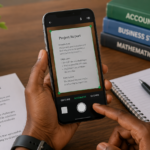
The camera translation feature works with Nigerian languages. Point your phone at a sign or document, and Google Translate overlays the translation. This is useful for translating between English and local languages in physical contexts.
Google Translate is free and works on Android and iPhone. It functions offline if you download language packs in advance. For basic communication needs, it is the most accessible option.
Meta’s No Language Left Behind
Meta, the company that owns Facebook and Instagram, developed a translation model specifically for underserved languages. The project is called No Language Left Behind.
The model supports Yoruba, Igbo, and Hausa. Quality is comparable to Google Translate for these languages. The advantage is integration with Meta’s platforms. Facebook and Instagram use this model for automatic translation of posts and comments.
For users browsing social media in English who encounter content in Nigerian languages, Meta’s translation appears automatically in some cases. The feature is not always visible to users but operates in the background.
Meta has also been developing speech recognition for Nigerian languages. This would allow voice input in Yoruba, Igbo, and Hausa with automatic transcription. The technology exists in research but is not yet widely deployed.
Hausa NLP Tools
Hausa has the most developed language technology among Nigerian languages. Several research projects and startups have built tools specifically for Hausa.
MasakhaNER is a research project that developed named entity recognition for Hausa and other African languages. It identifies names, places, and organizations in Hausa text. This supports search engines, content categorization, and information extraction.
Hausa text-to-speech tools are emerging. These convert written Hausa into spoken audio. Quality varies but the best implementations sound natural enough for basic applications like automated customer service or content narration.
Google Assistant offers limited Hausa support. You can set your phone language to Hausa and use voice commands for basic functions. The vocabulary is limited compared to English but expanding gradually.
Igbo Language Tools
Igbo language technology lags slightly behind Hausa but is catching up.
IgboSpeech is a project building speech recognition and text-to-speech for Igbo. The technology can transcribe spoken Igbo into text and read Igbo text aloud. Applications include voice assistants, audiobook creation, and accessibility tools for Igbo speakers who cannot read.
Nkọwa okwu is an Igbo dictionary and learning platform. While not AI-powered in the modern sense, it provides a digital foundation that AI tools can build upon. Comprehensive dictionaries are essential training data for more advanced language models.
Some Nigerian universities are conducting research on Igbo natural language processing. The University of Nigeria Nsukka and Nnamdi Azikiwe University have linguistics and computer science departments working on Igbo language technology.
Yoruba Language Tools
Yoruba benefits from a large speaker base and significant diaspora population interested in language preservation.
Yoruba Name is a project that uses AI to analyze and translate Yoruba names. It provides meanings, cultural context, and pronunciation guidance. While narrow in scope, it demonstrates the potential for culturally specific AI applications.
Several mobile apps teach Yoruba using AI-powered exercises and pronunciation feedback. These apps use speech recognition to evaluate the learner’s pronunciation and provide corrections. Quality varies significantly between apps.
Google’s research division has published papers on Yoruba natural language processing. The research is preliminary but indicates that major technology companies recognize Yoruba as a priority language for future AI development.
Pidgin English Tools
Pidgin presents unique challenges and opportunities for AI development.
The lack of standardized spelling makes training AI models difficult. Different speakers write “how far” as “howfa,” “how far,” “hfa,” and other variations. AI must recognize all these as the same expression. This requires significantly more training data than standardized languages.
Despite the challenge, several Pidgin AI projects exist. Pidgin GPT is a research effort to train language models specifically on Pidgin text. The model is experimental but demonstrates that Pidgin AI is technically feasible.
NaijaSenti is a sentiment analysis tool for Nigerian languages including Pidgin. It analyzes text to determine whether the sentiment is positive, negative, or neutral. Applications include social media monitoring, customer feedback analysis, and market research.
Nigerian fintech companies have shown interest in Pidgin AI for customer service. Many Nigerian customers prefer communicating in Pidgin. Chatbots and automated messaging systems that understand Pidgin would improve customer experience significantly.
Using ChatGPT and Other AI With Nigerian Languages
ChatGPT and similar large language models have some Nigerian language capability. This was not specifically designed but emerged because the training data contained text in many languages.
You can prompt ChatGPT in Yoruba, Igbo, or Hausa and receive responses in the same language. The quality is inconsistent. Simple conversations work. Complex topics cause the model to slip into English or produce garbled output.
Pidgin prompts sometimes work. The model has absorbed enough Pidgin from its training data to produce recognizable Pidgin responses. Again, simple exchanges work better than complex ones.
A practical use for ChatGPT with Nigerian languages is translation assistance. You can ask ChatGPT to translate between English and Nigerian languages. The translations are often better than Google Translate for idiomatic expressions because ChatGPT understands context more deeply.
Another use is content creation assistance. You can draft content in English and ask ChatGPT to help adapt it for a Nigerian language-speaking audience. The AI suggests culturally appropriate examples and phrasings that direct translation misses.
The Practical Reality
For most Nigerian users, AI tools for local languages are supplementary, not primary. They help with translation, basic communication, and content adaptation. They do not yet match the sophistication of English language AI.
The tools exist and are improving. A Hausa speaker can use Google Translate for basic text translation, voice commands for phone functions, and specialized tools for specific needs. An Igbo learner can access AI pronunciation feedback. A Yoruba content creator can use AI translation assistance to reach wider audiences.
The gap between Nigerian language AI and English AI is closing. Investment is flowing. Research is progressing. The Nigerian market is too significant to ignore permanently. The tools available now are early versions of technologies that will become much more capable within a few years.
Frequently Asked Questions
Can ChatGPT speak Yoruba fluently?
Not fluently. ChatGPT can produce Yoruba text for simple conversations and translations. Complex topics cause it to struggle. The responses are sometimes grammatically incorrect or unnatural. Use it as an assistant, not as a fluent speaker.
Is there an AI that translates Pidgin to English accurately?
No AI translates Pidgin to English with high accuracy currently. The lack of standardized Pidgin spelling makes this difficult. Some tools produce rough translations that convey the general meaning but miss nuance and detail.
Can I use Google Assistant in Hausa?
Yes, with limited functionality. Set your phone language to Hausa. Google Assistant responds to basic commands in Hausa. The vocabulary is smaller than English and complex requests may not work.
Are Nigerian language AI tools free?
Most are free. Google Translate, ChatGPT basic, and many research tools are available without cost. Some specialized apps charge for premium features. The free tools are adequate for most everyday needs.
Will AI replace the need to learn Nigerian languages?
No. AI translation is a supplement, not a replacement. Language carries culture, emotion, and identity that translation cannot fully capture. AI helps with communication across language barriers. It does not replace the value of genuine language knowledge.
What This Means for Nigerian Content Creators
Nigerian language AI creates opportunities for content creators. The supply of quality content in Yoruba, Igbo, Hausa, and Pidgin is low. The demand is high. Creators who produce content in local languages reach audiences that English content misses.
AI tools assist with this content creation. Translation, captioning, and adaptation become faster. A creator can produce content in English and local languages without doubling their workload. AI handles the heavy lifting of initial translation. Human review ensures quality and cultural appropriateness.
The audience for Nigerian language content is not small. Millions of Nigerians prefer consuming content in their first language. Brands seeking to reach these audiences need creators who can communicate authentically. The creators who build in this space now will be positioned advantageously as the technology matures.
Start experimenting today. Open Google Translate. Type something in your local language. See what the AI produces. Open ChatGPT and ask it a question in Yoruba, Igbo, or Hausa. Observe the response. The tools are not perfect but they are usable. Familiarity with them now prepares you for the more capable versions arriving soon.