Getting your blog to appear on the first page of Google feels like chasing a moving target. Just when you think you have figured out the formula, an algorithm update reshuffles the rules. The good news is that ranking on Google in 2026 is less about gaming a system and more about building something genuinely useful.
Here is a straightforward guide that covers what actually works right now without requiring an SEO degree to understand.
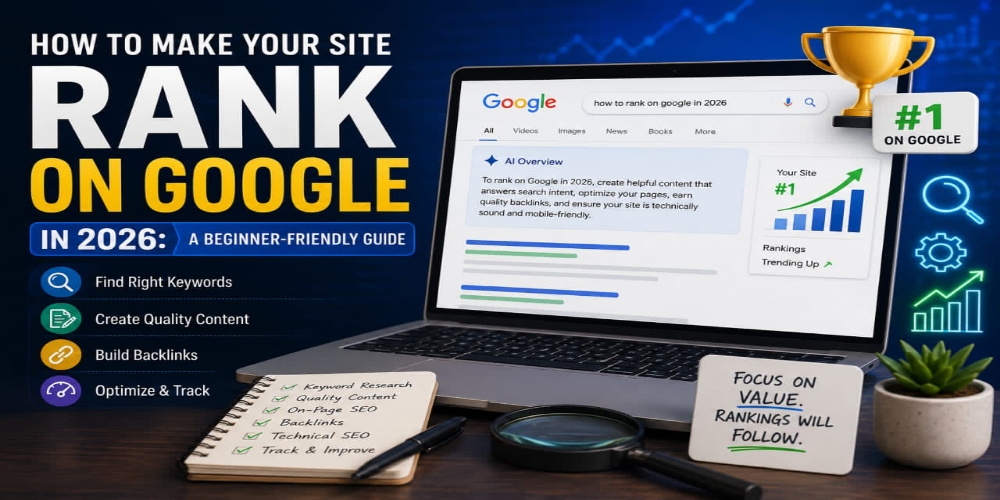
Start With Keywords People Actually Search
Before writing anything, figure out what your audience types into Google. These are keywords and they form the foundation of every ranking strategy.
Think about intent. Someone searching “how to edit a video” wants a tutorial. Someone searching “best video editing software” wants comparisons and recommendations. Someone searching “buy CapCut Pro” wants to purchase. Match your content to the intent behind the keyword or your page will never rank for it.
Longer specific phrases often convert better than broad terms. A post targeting “best free video editor for Android beginners” faces less competition and attracts more qualified readers than one targeting “video editor.” Tools like Google Keyword Planner and Semrush help with this research but even typing your topic into Google and studying the autocomplete suggestions provides useful direction.
Create Content Worth Reading
Google in 2026 evaluates content through a framework called E-E-A-T which stands for Experience, Expertise, Authoritativeness, and Trustworthiness. What this actually means is that content created from genuine firsthand experience ranks better than content written by someone who researched a topic but never actually did the thing.
- Write in-depth pieces that thoroughly cover a topic rather than surface-level overviews
- Include original images, screenshots, and examples rather than stock photos that add no real value
- Structure content with clear headings so both readers and search engines can scan it easily
- Back claims with specific data or personal experience rather than vague statements
- Refresh older posts periodically to keep statistics and information current
Optimize Your On-Page Elements
On-page SEO is the technical term for making individual pages readable by search engines. The most important elements are simpler than most beginners assume.
Your title tag is the clickable headline that appears in search results. Keep it under sixty characters and include your main keyword naturally. Write a meta description of about one hundred fifty characters that summarizes the page and gives someone a reason to click. This does not directly affect rankings but good descriptions improve click-through rates which does affect rankings.
Use one H1 heading per page that contains your primary keyword. Break up content with H2 and H3 subheadings that include related terms. Write descriptive alt text for every image that explains what the image shows and includes keywords where relevant. Keep your URL slug short and keyword-rich such as how-to-rank-on-google rather than post-123.
Build Internal Links Between Your Content
When you publish related posts, link them together. A post about video editing tools should link to your post about caption writing apps and your post about ring lights. Internal links help readers discover more of your content and help search engines understand the relationship between your pages.
Content hubs work especially well for this. Create one comprehensive pillar page covering a broad topic then link several shorter cluster articles back to it. This structure signals topical authority to Google.
Fix Technical Issues That Hold You Back
Technical problems silently kill rankings regardless of content quality. Your site needs an SSL certificate so it loads over HTTPS rather than HTTP. Browsers mark insecure sites and Google penalizes them. Your site must work perfectly on mobile devices since Google uses mobile-first indexing which means it primarily evaluates your mobile version. Test your site speed using Google PageSpeed Insights and fix flagged issues.
Submit your sitemap to Google Search Console, a free tool that shows how your site performs in search results. Check it regularly for indexing errors and fix any crawl issues that prevent Google from finding your pages.
Earn Credibility Through Backlinks
Backlinks are links from other websites to yours. They function like votes of confidence. The more reputable sites that link to you, the more Google trusts your content. But quality matters far more than quantity. One link from an established site in your niche outweighs dozens of links from random low-quality directories.
Earn backlinks by creating content worth referencing. Original research, helpful guides, and unique insights attract links naturally. Writing guest posts for other blogs in your niche also builds links while exposing your content to new audiences. Avoid buying links or participating in link schemes. Google penalizes these practices harshly.
Understand What Changed in 2026
Google now displays AI-generated summaries called AI Overviews at the top of many search results. To appear in these summaries, structure your content with direct answers to common questions. Lead articles with a concise summary that answers the main query upfront. Use headings phrased as questions. Include specific data points and statistics rather than vague statements.
The shift toward community content also accelerated. Platforms like Reddit and forums appear more frequently on page one because they contain authentic human discussions. Encouraging comments on your blog posts and embedding relevant social discussions adds the kind of genuine interaction Google increasingly values.
Track Progress and Adapt
Install Google Analytics to understand how visitors find and use your site. Check Google Search Console monthly to see which keywords drive traffic and where your pages rank. SEO is not a one-time task. Rankings shift as competitors publish new content and Google updates its algorithms. Monitor what works, double down on successful content types, and adjust strategy based on actual data rather than assumptions.
Ranking on Google takes time. A new blog typically needs several months before gaining meaningful organic traffic. Consistency matters more than speed. Publish helpful content regularly, follow the technical basics, and stay patient. Rankings come to sites that earn them.