You leave the house with ninety percent battery. By the time you get to your destination an hour later, your phone is already at fifty percent. You did not even use it that much. The screen was off most of the time. Yet the battery percentage kept dropping as if something was secretly running in the background.
The frustration is real. And the culprit is often something you cannot escape. Heat.
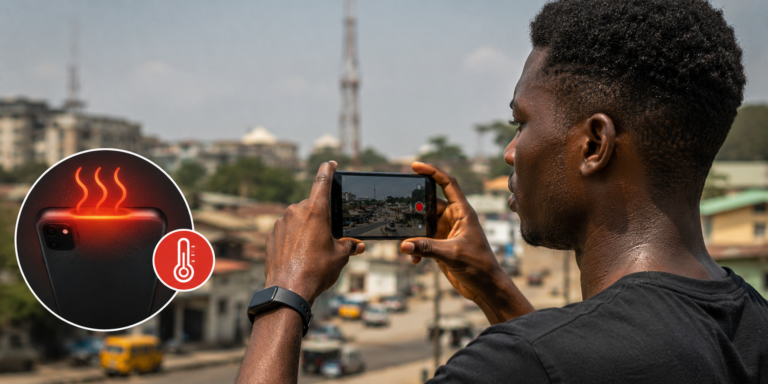
Nigeria is hot. Whether you are in Lagos, Abuja, Kano, or Port Harcourt, the temperature does not play nice with phone batteries. Combine the natural climate heat with the heat your phone generates while in use and you have a battery-draining double attack that most generic battery saving tips do not address.
This post explains why heat specifically drains your battery faster in Nigeria and what you can actually do about it.
Why Heat Kills Your Battery
Phone batteries are designed to work best within a certain temperature range. For most smartphones, the ideal operating temperature is between zero and thirty-five degrees Celsius. Anything above that stresses the battery.
Nigeria regularly hits temperatures above thirty degrees. Sometimes well above. Your phone is already operating outside its comfort zone before you even turn on the screen.
When a battery gets hot, the chemical reactions inside speed up in ways that degrade the battery’s ability to hold charge. The immediate effect is faster drain. The long-term effect is permanent battery damage. A battery repeatedly exposed to high heat will lose its maximum capacity faster than one kept cool.
Your phone also generates its own heat. The processor creates heat when running apps. The screen creates heat when brightness is high. Charging creates heat. Using mobile data in areas with poor signal creates significant heat because the phone boosts power to the antenna to maintain connection.
Now add Nigeria’s ambient heat on top of all that internal heat. Your battery is basically cooking. And a hot battery drains fast.
Why Nigerian Conditions Make It Worse
Several factors specific to Nigeria compound the heat problem.
Network instability is a major one. When signal is weak, your phone increases power output to stay connected. This generates extra heat. In Nigeria, network fluctuates constantly. Your phone is frequently hunting for signal, switching between 4G, 3G, and even 2G. Each switch strains the battery and adds heat.
Frequent power outages mean we charge phones irregularly. You see light, you charge immediately even if the battery is at fifty percent. Charging generates heat. Charging from a low percentage generates even more heat. Doing this repeatedly in a hot environment degrades the battery faster.
Many Nigerians use power banks. A power bank is convenient but it also generates heat during charging. Using a power bank while outside in the sun is a double heat source. The ambient heat plus the charging heat stresses the battery.
Phone cases designed for protection can trap heat. In cooler climates this is not an issue. In Nigeria, a thick phone case acts like a sweater on your phone. The heat has nowhere to escape.
Practical Fixes That Actually Work in Nigeria
Generic advice like “reduce screen brightness” helps but is not enough. Here are specific actions that address the Nigerian heat reality.
Stop charging your phone in direct sunlight. This sounds obvious but many people do it without thinking. You plug your phone near a window where the sun is blazing in. You charge it in a car with the sun beating down. You charge it outside at a shop. The combination of charging heat plus solar heat is devastating to the battery. Charge in the coolest part of the room, away from direct sunlight.
Remove your phone case while charging. This is a simple habit that makes a real difference. Cases trap heat. Removing the case while charging allows heat to dissipate faster. Put the case back on when you are done.
Do not use your phone heavily while it is charging. Playing games, streaming videos, or even scrolling TikTok while charging generates processor heat on top of charging heat. The phone gets noticeably hot and stays hot. If you must use it, keep activity light. Messaging is fine. Gaming is not.
Turn off mobile data when you do not need it. This is a big one. Mobile data is a major heat generator especially in areas with weak signal. If you are home with WiFi, turn off mobile data. If you are not actively using the internet, switch to airplane mode for a while. Your battery and your phone temperature will thank you.
Use battery saver mode proactively. Most people turn it on only when the battery is already low. Instead, turn it on when you know you will be out in the heat for a while. Battery saver limits background activity and reduces processor power which means less heat generated.
Avoid leaving your phone in a parked car. Cars heat up like ovens under the Nigerian sun. Leaving your phone on the dashboard or seat while you step out is one of the fastest ways to overheat and permanently damage the battery. Take your phone with you or hide it under the seat where it is slightly cooler.
Close apps you are not using. Many people have thirty apps running in the background. Each one uses processor resources. Each one contributes to heat. Make it a habit to close apps properly rather than just minimizing them.
Update your apps and phone software. Updates often include optimizations that reduce battery drain and heat generation. An outdated app might be running inefficient background processes that heat your phone unnecessarily.
What About Battery Saving Apps?
Most battery saving apps are useless. They claim to optimize your phone but often run their own background processes that drain more battery than they save. Some even show ads that consume data and generate heat.
Your phone already has built-in battery management tools. On Android, the battery settings menu shows you which apps are draining power. That is more useful than any third-party app.
Focus on the habits described above rather than downloading apps that promise miracles.
Signs Your Battery Is Already Damaged by Heat
If your phone gets hot very quickly even during light use, the battery may already be degraded. If the battery percentage jumps unpredictably like dropping from forty percent to fifteen percent in minutes, the battery is struggling. If your phone shuts down at twenty percent or higher, the battery is damaged. If the back of the phone is slightly swollen or the screen is lifting, stop using the phone immediately. A swollen battery is a safety hazard.
In these cases, the only real solution is battery replacement. Most phone repair shops in Nigeria can replace batteries for common brands. Insist on a quality replacement, not the cheapest one available. A bad quality battery will repeat the same problems within months.
Long-Term Battery Care for Nigerian Users
If you just bought a new phone, protect the battery from the start. Avoid the bad habits early. The less heat exposure the battery endures, the longer it will last at full capacity.
Try to keep your battery between twenty percent and eighty percent. Constantly draining to zero and charging to one hundred percent stresses the battery. Occasional full cycles are fine but daily deep discharges accelerate wear.
Use quality chargers. Those cheap roadside chargers are tempting but they often deliver unstable power that generates excess heat. Spend a bit more on a quality charger. It is cheaper than replacing a damaged battery or worse, a damaged phone.
The Simple Summary
Heat is your battery’s enemy. Nigeria is hot. Your phone already generates heat. Network issues add more heat. Charging adds even more heat.
You cannot control the Nigerian sun. But you can control whether you charge in shade. Whether you remove your case while charging. Whether you turn off data when it is not needed. Whether you keep your phone out of parked cars.
These small habits compound. Over a year, they can mean the difference between a battery that still lasts all day and one that dies by noon. Start paying attention to how hot your phone feels. When it feels warm, ask yourself what is generating that heat and address it immediately. Your battery will last longer and you will spend less time hunting for charging points.