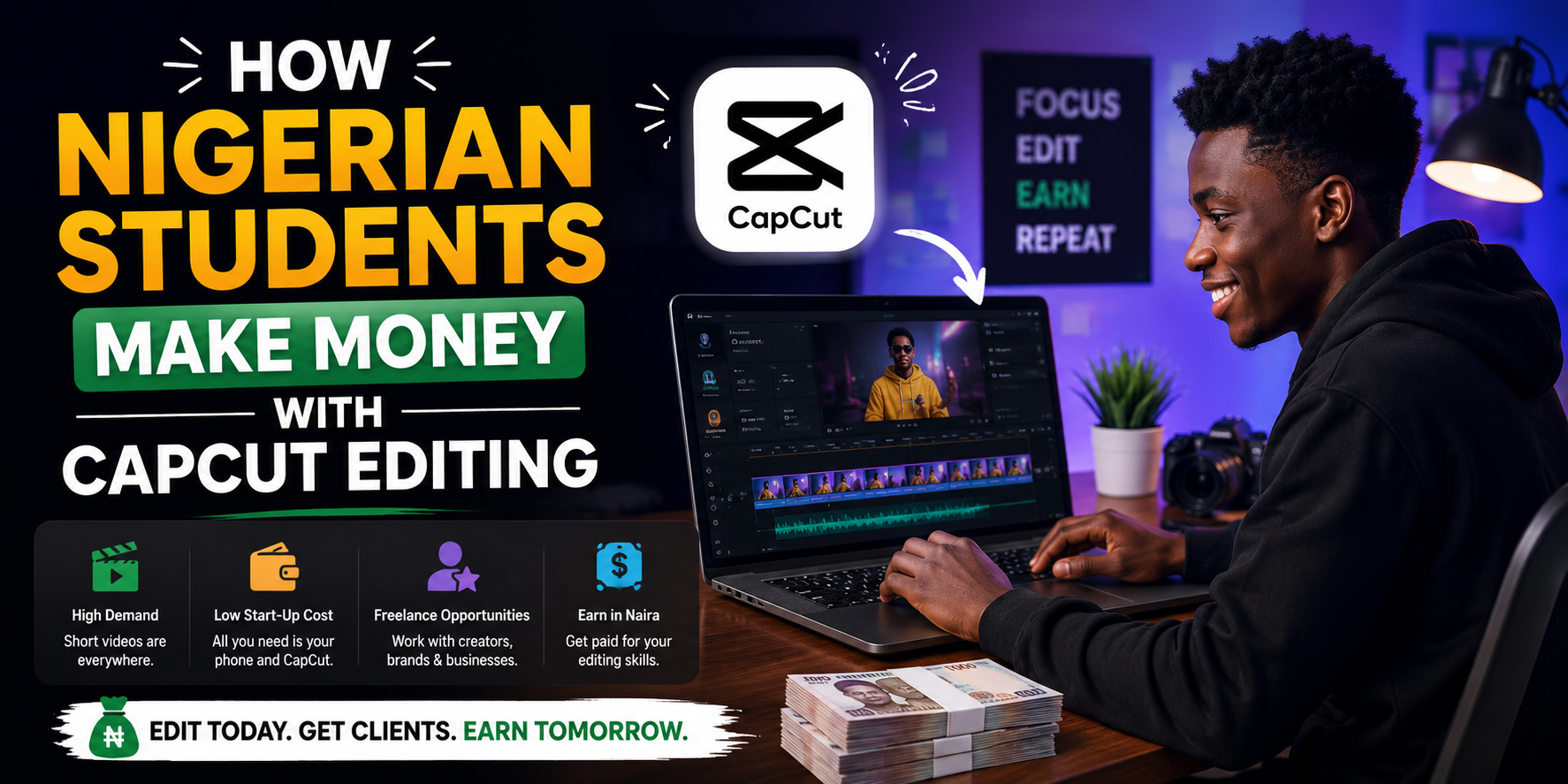
Campus life in Nigeria is expensive. Between handouts, data subscriptions, feeding, and the occasional departmental levy, the money finishes fast. Most students are looking for side hustles that do not interfere with lectures and do not require startup capital.
CapCut editing is one of the best options available right now. It is free. It runs on Android phones. And there is genuine demand for editors who know how to use it well.
I have seen students go from editing their own TikTok videos to getting paid by brands, creators, and small businesses who need video content. This post explains exactly how to start, where to find clients, and what to charge.
Why CapCut Specifically
CapCut is not a watered-down editing app for beginners who cannot afford Premiere Pro. It is a legitimate tool that professional creators use daily. The features have grown so much that you can edit entire projects without touching a laptop.
The free version gives you almost everything. Auto captions which are essential for social media videos. Smooth transitions. Keyframe animations. Background removal. Noise reduction. Speed ramping. Filters and colour grading. A built-in music and sound effects library.
For Nigerian students, the biggest advantage is that CapCut works on affordable Android phones. You do not need an iPhone. You do not need a high-end device. If your phone can run TikTok, it can probably run CapCut.
Another advantage is that CapCut integrates directly with TikTok. TikTok owns CapCut. So trends and templates sync between both apps. When a new TikTok trend emerges, CapCut usually has a template ready for it within days.
What Kind of Videos Nigerian Clients Need Edited
Understanding what people pay for is the first step. These are the video types in highest demand right now.
Content creators need their talking-head videos edited. They film themselves speaking to the camera for five to ten minutes. You cut out the pauses, the mistakes, the boring parts. You add captions, background music, and simple graphics. You turn a raw twenty-minute recording into a tight eight-minute video that holds attention.
Brands and businesses need short promotional videos. A skincare brand launching a new product. A restaurant showing their menu. A real estate agent showcasing a property. These videos are usually thirty to sixty seconds and need clean editing with text overlays and music.
Podcasters need clips extracted from their long episodes. You take a two-hour podcast, find the most interesting sixty-second moment, edit it with captions and a headline, and optimize it for Instagram Reels or TikTok. Many podcasters hire editors solely for this task.
Musicians and aspiring artists need simple lyric videos and visualizers. Low-budget music videos that just need text, effects, and sync. Some also need behind-the-scenes content edited for social media.
Fellow students sometimes need editing help too. Final year students documenting their project. Departmental associations promoting events. Fellowship groups creating announcement videos. The demand is closer than you think.
How to Learn CapCut Properly
Most people use CapCut but very few use it well. Being able to do basic trims and add music does not make you an editor people will pay.
Spend time learning the advanced features. Keyframe animation lets you create smooth motion with text and images. Understanding how to use keyframes properly separates amateur editors from pros.
Learn how to do good captioning. Auto captions are a starting point but you need to manually correct them. Check spelling, punctuation, and timing. Good captions are accurate and appear at the right moment. Bad captions make the whole video look unprofessional.
Study colour correction and grading basics. Making footage look bright, clear, and consistent is something clients notice immediately. Many clients film in poor lighting. Your editing can partially rescue that footage.
Learn pacing and rhythm. This is harder to teach because it comes with practice. But watch well-edited videos in the niche you want to edit for. Notice how long shots last. When they cut. How music and visuals sync. Internalize that rhythm.
Free resources on YouTube teach all of this. Search for CapCut tutorials specifically for the style you want to edit. There are tutorials for talking-head edits, for TikTok transitions, for motion graphics, for everything.
How to Practice Before Taking Paid Work
Do not start charging when you have never edited anything. Build a small portfolio first.
Option one is to edit your own content. Even if you are not a content creator, film yourself talking about something for two minutes. Edit it as if it was for a paying client. Add captions, music, transitions. Make it look professional. Do this five times with different styles.
Option two is to offer free edits to friends who post content. Tell them honestly that you are learning and want to practice. Edit one or two videos for them. If they like it, ask for permission to use the before and after in your portfolio.
Option three is to download stock footage from free sites like Pexels and practice creating a promotional video. Imagine a brief from a client and execute it. This shows range even without real clients yet.
Save all your practice work. Organize it in a folder on your phone. These samples become your portfolio when you start pitching clients.
Where Nigerian Students Find Editing Clients
Clients are everywhere once you start looking.
Twitter is a goldmine for finding Nigerian creators who need editors. Follow content creators in tech, finance, lifestyle, and comedy. Many of them tweet when they are looking for editors. Some simply complain about editing being stressful which is an opening for you to politely offer your services.
Instagram is similar. Look for pages that post reels regularly. Small businesses, influencers, event vendors. Check if their editing quality is inconsistent which signals they might need an editor. Send a respectful DM introducing yourself and showing a sample.
WhatsApp status is the most overlooked platform. Post your editing work on your status. Your contacts might not be clients but they know people who need editors. Your uncle’s friend’s son runs a business and needs video content. You never know who is watching.
Freelance platforms like Fiverr and Upwork have categories for video editing. The competition is global but Nigerian pricing can be competitive. Even one international client paying in dollars changes your income significantly.
On campus, print a simple flyer and share on departmental WhatsApp groups. Offer student-friendly rates. Final year students, fellowship groups, and event organizers often need quick edits and have small budgets.
What to Charge as a Student Editor
Pricing is tricky when you are starting. Charge too high and you get no clients. Charge too low and you burn out doing cheap work.
Starting rates for student editors are usually between five thousand and fifteen thousand naira per short video. A short video means under one minute of final edited content like an Instagram Reel or TikTok post.
For longer YouTube-style videos of five to ten minutes, starting rates can range from fifteen thousand to thirty thousand naira. The price increases with complexity. Adding lots of graphics, advanced animations, or extensive captioning justifies higher rates.
As you gain experience and your portfolio grows stronger, increase your rates. The goal is not to stay at student pricing forever. The goal is to build enough skill and reputation to charge professional rates.
Always agree on price before starting work. Send a simple message outlining what you will deliver and what it will cost. For new clients you do not know, ask for fifty percent upfront. This protects you from doing work and getting ghosted.
How to Keep Clients Coming Back
Getting one client is good. Keeping that client for months is better.
Deliver on time. If you agree to deliver in three days, deliver in three days or earlier. Clients value reliability almost as much as quality. An editor who is good and punctual will keep clients for a long time.
Communicate clearly. If you are running late, say so early. Do not wait until the deadline to give excuses. Most clients are understanding if you communicate proactively.
Be open to feedback. Your first version might not be what the client imagined. That is normal. Ask what they want changed. Fix it. Do not be defensive. Every revision makes you better.
Eventually, ask satisfied clients to refer you to others. A simple message like “If you know anyone else who needs video editing, I would appreciate the referral” can bring in new work with zero marketing effort.
Starting This Week
Download CapCut if you have not already. Watch two tutorials on the specific editing style you want to learn. Practice editing one video today.
Tell three people that you are learning video editing and looking for practice projects. Post one edited sample on your WhatsApp status. Put yourself out there before you feel fully ready. You will improve faster with real feedback than with endless practice alone.