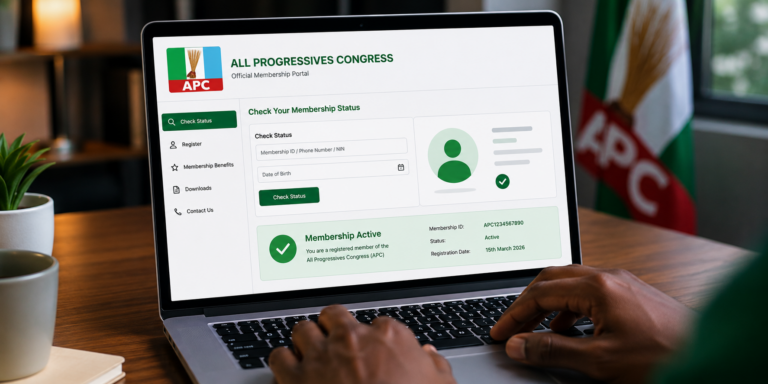
The All Progressives Congress has just completed one of the most ambitious primary elections in Nigeria’s political history. From May 15 to May 23, 2026, the party conducted direct primaries across all 8,809 wards nationwide, putting the fate of its candidates for the 2027 general elections directly in the hands of registered party members. The results are now in, and they tell a fascinating story of victories, defeats, and the shifting power dynamics within the ruling party. President Bola Ahmed Tinubu secured the presidential ticket with an overwhelming 10,999,162 votes, but the real drama happened at the state and federal constituency levels.
Why the APC Ditched Consensus and Went for Direct Primaries
The APC’s decision to adopt direct primaries nationwide was not a simple choice. The party initially pushed for consensus arrangements in many states, hoping to reduce internal fighting and present a united front. However, the consensus plan largely collapsed because of a key provision in the Electoral Act 2026. Section 87(2) of the Act states that consensus can only work if all cleared aspirants give their written consent to step down for one candidate. If even one aspirant refuses, the party must revert to direct primaries. This provision gave individual aspirants an effective veto power, and many refused to step aside, forcing the party to open the process to all registered members.
Politically, the shift also fit President Tinubu’s strategy. As far back as late 2024, the president had signaled that party structures, not high-level endorsements, would determine who gets APC tickets. This represented a break from the old order where governors and power brokers produced delegate lists and handed out tickets with minimal input from the grassroots. Direct primaries, in theory, cut out the middlemen and transferred nomination power from party power brokers to ordinary registered party members.
The Presidential Primary: Tinubu’s Landslide Victory
On May 23, 2026, President Bola Ahmed Tinubu clinched the APC presidential ticket in a direct primary election that was unprecedented in scale. The president polled 10,999,162 votes, defeating his lone challenger, Stanley Osifo, who polled 16,503 votes. The chairman of the party’s Presidential Electoral Committee and former Secretary to the Government of the Federation, Pius Anyim, announced that Tinubu won in all 36 states and the Federal Capital Territory.
The turnout was a far cry from the 2023 presidential primaries, where only delegates participated and aspirant Bola Ahmed Tinubu polled just 1,271 votes to defeat his rivals. The direct primary model allowed over 10 million registered APC members to vote, making it the first time a Nigerian political party had adopted this model for a presidential primary. Pius Anyim declared: “By this groundbreaking model, the APC has become the first political party to adopt the direct primary election model for its presidential primary election.”
The State-Level Battles: Where the Real Action Happened
While the presidential primary was a foregone conclusion, the real drama unfolded in the states where governors fought to protect their influence and aspirants fought for their political survival. The direct primaries were a make-or-break contest for many, and the results were mixed.
Yobe State: Governor Mai Mala Buni endorsed former Secretary to the State Government, Baba Wali, as the consensus governorship candidate. However, other aspirants, including Kashim Musa Tumsah, former Inspector-General Usman Alkali Baba, and Senator Ibrahim Bomai, all purchased and submitted nomination forms, rejecting the consensus arrangement. Tumsah argued that consensus must comply with the Electoral Act, warning against elite-driven selection processes that exclude others.
Borno State: Governor Babagana Zulum backed consensus as the preferred method for selecting candidates, stressing that it strengthens party unity. He noted that where consensus fails, the party would resort to direct primaries. He also announced that aspirants who voluntarily withdraw from contests would be considered for appointments at both state and federal levels to manage grievances.
Cross River State: In Ikom/Boki Federal Constituency, the party successfully conducted direct primaries after efforts to sustain a consensus arrangement collapsed. Victor Abang, the member representing the constituency in the House of Representatives, emerged as the winner, polling 10,850 votes and defeating four other aspirants. The returning officer said the process was conducted in line with the provisions of the Electoral Act and the APC constitution.
Oyo and Lagos States: Aspirants in these states defied elders’ endorsements by purchasing nomination forms, signalling a strong preference for direct primaries over consensus. In Lagos, Nollywood star-turned-politician Desmond Elliot complained of intimidation during the APC primary for the Surulere 1 Constituency, forcing him to withdraw from the race.
Gombe State: The APC’s attempt at consensus candidacy was highly contested. Jamilu Isyaku Gwamna was adopted as the party’s consensus governorship candidate, but supporters of Professor Isa Pantami and Senator Saidu Alkali rejected the process, insisting it violated the Electoral Act and the APC’s national directive.
The Challenges and Controversies
Despite the APC leadership’s claims that the primaries were “near perfect” and “rancour-free,” the process was not without its challenges. There were widespread complaints of candidate imposition, exclusion of stakeholders, electoral manipulation, violence, and dissatisfaction over the use of consensus arrangements. Some aggrieved aspirants accused the party of shutting out popular candidates under the guise of consensus, describing the process as unfair and lacking transparency.
APC National Secretary, Senator Ajibola Basiru, defended the process, insisting that no political party in Nigeria could match the APC’s level of organisation, openness, and internal democratic process. He stated: “Based on the reports received from both the House of Representatives and the Senate, I would assess our party very favourably in terms of organisation and the overall results of the exercise.”
APC National Chairman, Prof. Nentawe Yilwatda, also defended the consensus deals, maintaining that no aspirant had been forced to submit to consensus. He said: “Our guidelines are clear. Where a consensus doesn’t work, you go for direct primary and that’s what people are doing across the states.” He described the anger from aspirants who lost out as expected, saying: “My assessment is very simple. You can see how competitive our party has turned out to be… It is usual for people to complain but it is near perfect.”
What This Means for the 2027 Elections
The APC’s gamble on direct primaries will define its 2027 campaign before the first ballot is cast. On paper, the move returns power to the party’s base and buries the backroom consensus deals that have bred resentment and defections. In practice, the May 15-23 window was a stress test of whether the ruling party can manage democracy within its own ranks.
There are real risks. If losers reject results, there could be parallel primaries and a flood of lawsuits. States like Zamfara, Rivers, and Kano have already cost the party governorships or federal seats when INEC nullified results or courts ruled against parallel primaries. If 8,809 ward-level contests produce 10-15 states with competing winners, the litigation could drag into September, leaving APC candidates with no time to campaign while opposition parties consolidate early.
However, the disputes also create an opening for APC to rebuild credibility if managed well. Voters are tired of Abuja-imposed candidates and consensus deals that bypass the base. Senator Ayo Arise stressed that “as long as electoral malpractice is not introduced, disputes will not be difficult to resolve. Once a person has gone through the primary and lost fairly, the next step is to accept the outcome.”
Frequently Asked Questions
1. When did the APC conduct its 2026 primaries?
The APC conducted primaries for National and State Assembly seats from May 15, 2026, with governorship and presidential primaries held on May 23, 2026.
2. How many votes did President Tinubu get in the APC presidential primary?
President Bola Ahmed Tinubu polled 10,999,162 votes, defeating his lone challenger, Stanley Osifo, who polled 16,503 votes.
3. Did the APC use consensus or direct primaries in the states?
The party initially pushed for consensus in many states but reverted to direct primaries where aspirants refused to agree. Section 87(2) of the Electoral Act 2026 requires written consent from every aspirant for consensus to be valid.
4. Were there controversies during the APC primaries?
Yes. There were complaints of candidate imposition, exclusion of stakeholders, electoral manipulation, violence, and dissatisfaction over consensus arrangements in states like Yobe, Gombe, Oyo, and Lagos.
5. What happens to aspirants who lost in the primaries?
APC leaders have said they have mechanisms to manage grievances, including dialogue, promises, and possible appointments. Governor Zulum of Borno State announced that aspirants who voluntarily withdraw from contests would be considered for appointments.
6. Are the APC primaries considered credible?
APC leaders describe the primaries as the “most credible, most free and most rancour-free primaries since the political history of this country.” However, opposition parties and some aggrieved aspirants have raised concerns about the process.