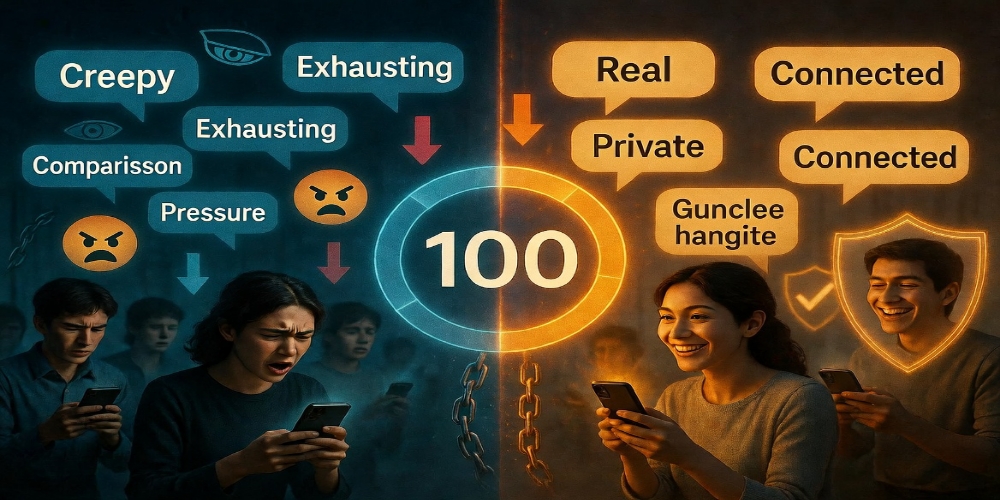
We ran a simple survey last month. One question only. What do you genuinely hate about social media right now? We expected the usual answers. Ads. Trolls. Algorithm changes. But what came back was more honest and more personal than we anticipated.
One hundred ModafVibe users shared their unfiltered thoughts. Here is what they told us and why their answers changed how we think about building this platform.
The Algorithm Knows Me Too Well and It Feels Creepy
This came up repeatedly. Not anger at algorithms hiding their posts. That came up too. But a deeper discomfort with how accurately platforms predict their interests, their insecurities, and their late night scrolling habits.
A university student wrote that her phone showed her weight loss ads the day after she mentioned feeling bloated to a friend. She had not searched anything. She had only spoken the words aloud near her phone. That feeling of being watched followed her for days.
A young father said his Explore page started showing baby products the week his wife discovered she was pregnant. Before they had told anyone. Before they had posted anything. The platform connected data from her shopping habits and his location history and drew a conclusion more intimate than they had shared with family.
People are not naive about how data collection works. They understand targeted advertising in theory. But experiencing its accuracy still feels violating. Several respondents used the same phrase: “I feel like the product rather than the user.”
Comparison Culture Is Quietly Destroying Confidence
We expected some mention of comparison. The surprise was how deeply and personally people described the damage.
A graphic designer in her late twenties wrote that she stopped posting her work entirely because every time she opened Instagram she saw someone younger doing better work with more followers. She knew rationally that comparison was pointless. Knowing did not stop the feeling.
A recent graduate told us he deleted all social apps during his job search because seeing former classmates announce new positions while he struggled to get interviews made him feel worthless. He called social media a highlight reel of other people’s lives playing on loop during the worst months of his own.
Multiple respondents described an experience where they felt genuinely happy about something in their own life until they opened a social app and immediately felt inadequate. The happiness did not survive the first scroll.
The Pressure to Be Always On
Creators described exhaustion that goes beyond normal work fatigue. Posting daily is hard but the real weight comes from the expectation that you should be available at all times. Reply to comments quickly. Engage with other posts. Show up in Stories so the algorithm remembers you. There is no off switch.
A lifestyle creator with about five thousand followers wrote that she calculated her screen time for one month and discovered she spent more hours engaging on social media than she spent creating anything. The engagement was supposed to support the creating. Instead it consumed it.
A small business owner said she feels guilty whenever she takes a weekend off from posting because she watches her insights drop on Monday. The platform punishes rest. So she rests less.
The Outrage Machine Exhausts Everyone
Several respondents described logging onto platforms feeling calm and leaving twenty minutes later feeling angry or anxious. Not because anything happened to them personally. Because the content that surfaced was designed to provoke strong reactions.
One person wrote that she realized she had argued with three strangers about topics she had never heard of that morning. The platform served her content specifically because it would make her argue. The arguing kept her scrolling. She felt manipulated and a little embarrassed.
Another user described uninstalling an app after a week where every session left him in a worse mood than when he opened it. He called it doomscrolling without the doom. Just low grade irritation that accumulated into genuine unhappiness.
The Good Part They Still Want
Despite everything they hate, these hundred people are still on ModafVibe. Still seeking connection. Still believing social media can be something better than what it became.
They want:
- Chronological feeds where they see what they signed up to see
- Privacy controls they understand without needing a law degree
- To log off feeling slightly better than when they logged on
- Communities small enough to feel personal and tools simple enough to use without gaming anything
Several respondents ended their messages with similar sentiments. “Please do not become what you are trying to replace. Build something that respects us as humans rather than data points. We want this to work.”
What We Are Doing Differently
The survey responses shaped our development priorities for the rest of the year. Chronological feeds remain default and will stay that way permanently. We are not building an Explore page that tracks off-platform behavior or makes invasive assumptions about your life. Privacy settings use plain language because consent requires understanding what you agree to.
We are building community tools for smaller groups rather than optimizing for viral reach. The platform rewards genuine interaction over manufactured outrage because engagement that harms mental health is not a feature no matter how much it increases screen time.
We are also being transparent about what we are doing and why. Posts like this one. Regular updates about decisions we are making. An open line between the people building ModafVibe and the people using it.
The survey confirmed what we suspected. People want social media that feels social again. They want connection without surveillance. Community without comparison. Engagement without exhaustion.
That is what we are building. If you recognize yourself in any of these stories, ModafVibe might be the space you have been looking for. Come join people who want the same things you do.